

FAQ's
How and what we measure?
How and what we measure?
A very simple blood test checks how much of this essential steroid hormone you have in your body. The progesterone prepares the uterus for pregnancy, supports early fetal development and controls the menstrual cycle. During pregnancy, the placenta produces large amounts of progesterone to maintain a healthy environment for the growing fetus. For nonpregnant females the test might verify ovulation or diagnose abnormal uterine bleeding and hormonal imbalances. As a health marker, progesterone levels can reflect adrenal or testicular disorders in men.
Why should you monitor Progesterone levels?
Why should you monitor Progesterone levels?
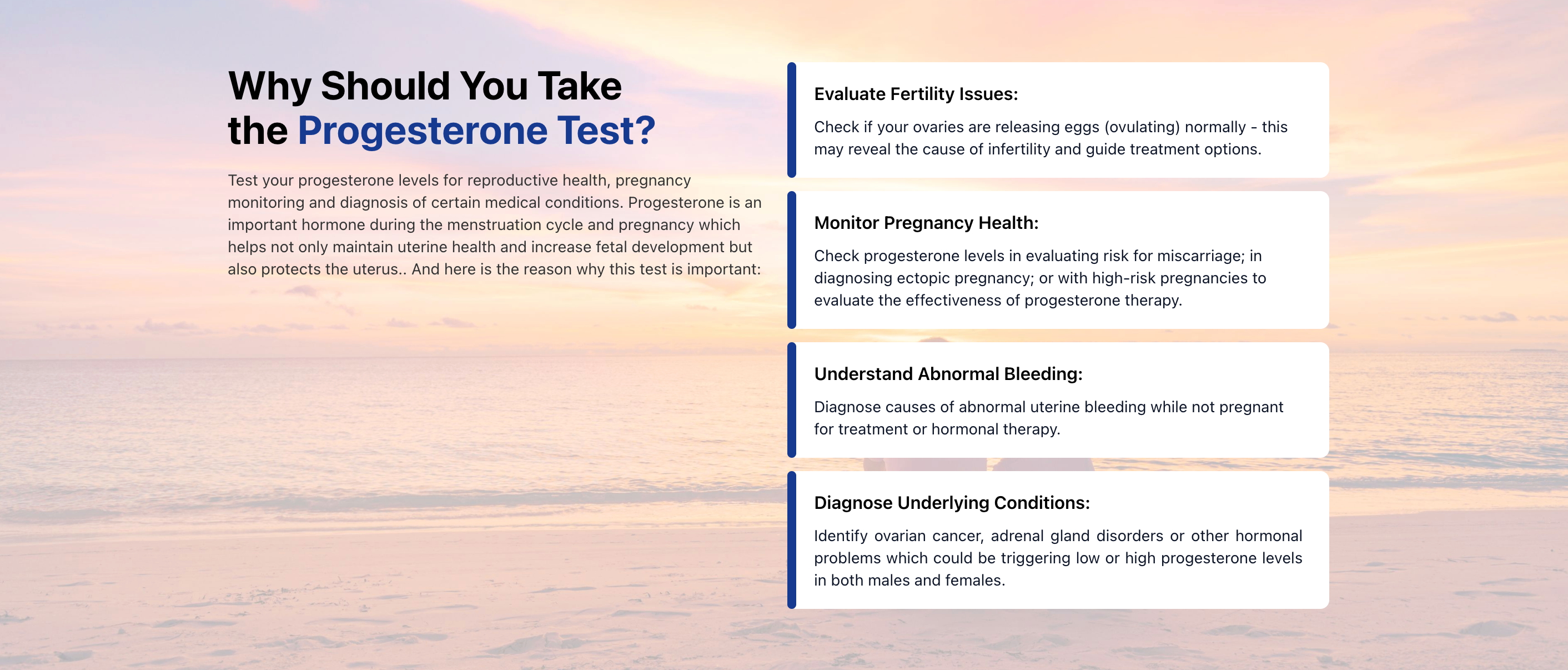
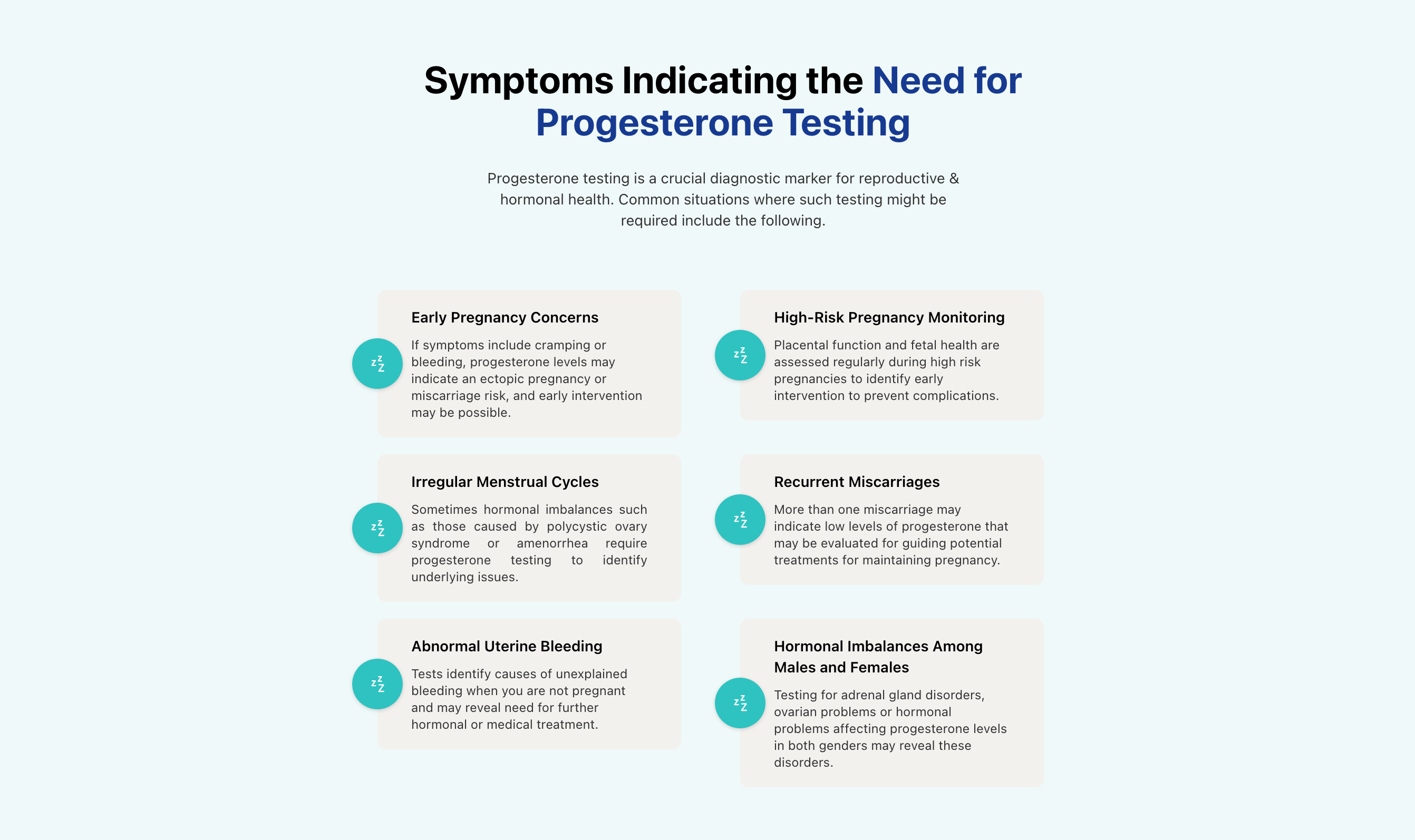
In women, low levels of progesterone might suggest infertility or irregular menstrual cycles or early pregnancy dangers, for instance ectopic pregnancy and miscarriage. For patients undergoing fertility treatments progesterone tracking guarantees the success of IVF or IUI. In pregnant women, regular monitoring may reveal complications such as preeclampsia or placental neoplasms. High progesterone levels in women and men may indicate adrenal gland disorders or hormone related cancers, indicating the higher health importance of this hormone.
Why Progesterone levels matter for Menstrual Health?
Why Progesterone levels matter for Menstrual Health?
Together with estrogen, progesterone is the backbone of menstruation health. This helps prepare the lining of the uterus for possible implantation and signals the body that pregnancy has not taken place - menstruation. Unbalanced levels of progesterone may cause irregular cycles, heavy bleeding or missed periods - menorrhea. Testing for progesterone concentrations might reveal polycystic ovary syndrome (PCOS) and/or luteal phase defects causing ovulation disruption and decreased fertility. A correction of such imbalances could restore cycle regularity and improve reproductive health.
Why it is a comprehensive marker for women and men?
Why it is a comprehensive marker for women and men?
Although strongly linked to the reproductive health of females, progesterone is a fairly significant marker in men as well as women. It gives information regarding fertility, pregnancy health and hormonal imbalance in women. Deficiencies in progesterone may represent adrenal gland disorders or testicular issues requiring medical attention in men. Measuring progesterone allows healthcare providers to diagnose and manage conditions from reproductive health issues to systemic hormonal imbalances.
What can I expect during the test?
What can I expect during the test?
This test requires no special preparation. Eating and drinking is allowed as usual before the appointment.
We will take a tiny blood sample with a finger prick. This is quick, minimally invasive and prepares the sample for testing.
Collecting blood samples is done on a test card which is analysed by an advanced machine. This lets us measure your blood level of progesterone very exactly.
The testing takes only about 15 minutes. Wait while the analysis is completed.
You'll get a report describing your progesterone levels once the test is over. The results will be explained to you so you know what they mean for your health.